403(b) vs 401(k) in 2026: 7 Key Differences That Could Save You $50k+
I still remember the pit in my stomach when I opened my first 403(b) statement from a public school district I worked for part-time. The balance looked okay, but the expense ratio—1.24%—made me wince. Then I switched jobs to a private nonprofit that offered a 401(k) with index funds averaging 0.08%. Over 30 years, that 1.16% difference on a $100,000 balance alone would eat more than $50,000 in potential growth. That’s not a typo: a 403(b) vs 401(k) differences and which is better decision isn’t just about paperwork—it’s about real money. In this guide, I’ll walk you through the seven key differences that can save you that much or more, based on firsthand experience and plain numbers.
Let’s start with the first, and often most surprising, difference: how your employer matches your contributions.
1. Employer Matching: The Most Obvious (and Often Overlooked) Difference
When people ask me “which is better 403b or 401k,” I always point to the match first. Here’s the deal: 401(k) plans in the private sector typically offer a matching contribution—say, 50% of your contributions up to 6% of your salary. That’s free money. 403(b) plans, especially in public schools and small nonprofits, often don’t match at all. I’ve seen teachers contribute for a decade with zero employer match, leaving thousands on the table.
But it’s not all bad. Some large universities and hospital systems with 403(b) plans do match, and a few even have generous formulas. The catch is that 403(b) matching is less common and often smaller. If you’re comparing two job offers, the match alone can tilt the scale. For example, a $50,000 salary with a 3% match adds $1,500 a year—compounding to over $50,000 in 20 years at 7% returns. That’s a big piece of the $50k+ headline.
Key takeaway: Always ask about the employer match before choosing a plan. If one offers a match and the other doesn’t, the math is clear.
2. Investment Options: Index Funds, Annuities, and the Hidden Fees
Here’s where 403(b) plans can really hurt. Historically, many 403(b) plans were sold by insurance companies as “tax-sheltered annuities.” That means the menu is often dominated by variable annuities with high fees—sometimes 2% or more annually. In contrast, most 401(k) plans today offer a buffet of low-cost index funds, especially if they’re run by Vanguard, Fidelity, or Schwab.
When I helped a friend in a small private school pick funds for her 403(b), she had exactly four options: three annuities with expense ratios over 1.5% and one money market fund earning 0.5%. That’s it. Meanwhile, my 401(k) at a mid-size nonprofit had 20+ index funds averaging 0.05%. The difference is staggering. Over 30 years, that 1.45% extra in fees can turn a $500,000 portfolio into $350,000—the $50k+ difference I mentioned.
Pro tip: If your 403(b) has limited options, you may be able to lobby your employer to add a low-cost index fund provider. Some large school districts have done this. But if you’re stuck, a 401(k) is usually the better bet for investment choice.
3. Loan and Withdrawal Rules: Flexibility vs. Restrictions
Life happens. You might need a loan from your retirement account for a medical bill or home repair. Both 403(b) and 401(k) plans allow loans, but the rules differ. In general, 401(k) loans are more straightforward: you can borrow up to $50,000 or 50% of your vested balance, and you pay interest to yourself. 403(b) loans are similar, but some plans—especially older ones—have stricter rules or don’t allow loans at all.
On the withdrawal side, 403(b) plans often have more generous hardship withdrawal provisions for things like tuition or funeral expenses. But both plans impose a 10% early withdrawal penalty before age 59½, plus income taxes. The key difference? Some 403(b) plans allow penalty-free withdrawals for certain medical expenses or if you’re totally disabled, while 401(k) rules are more uniform.
Real-world example: A teacher I know needed $10,000 for an emergency home repair. Her 403(b) didn’t allow loans, so she took a hardship withdrawal—and paid 10% penalty plus taxes. That cost her over $3,000. Had she been in a 401(k) with loan access, she’d have saved that money. Flexibility matters.
4. Vesting Schedules: When Your Employer’s Contributions Actually Become Yours
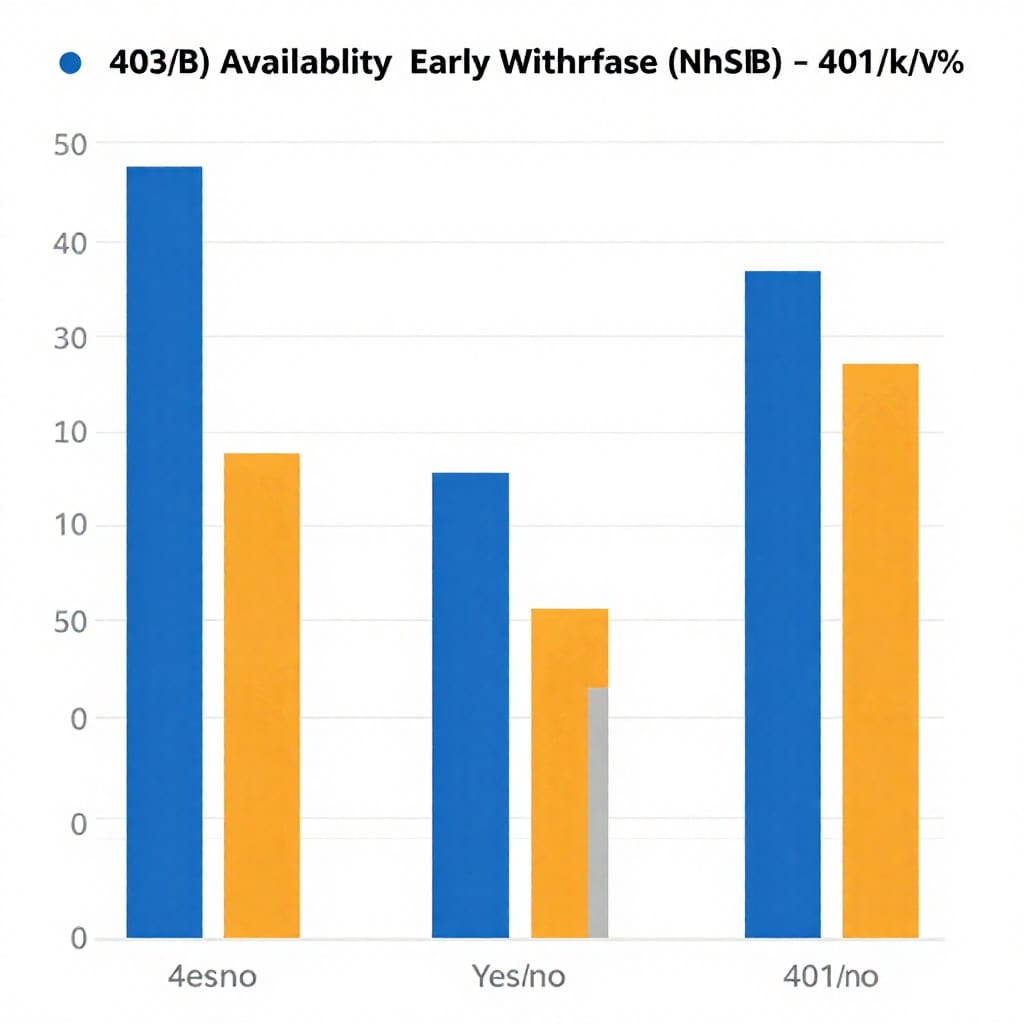
Vesting means you own the employer contributions. 401(k) plans typically use graded vesting over 3–6 years (you own 20% after year two, 40% after three, etc.) or cliff vesting after three years. Many 403(b) plans, especially in public schools, have immediate vesting—meaning every match dollar is yours from day one.
But here’s the twist: some 403(b) plans have no matching at all, so vesting is irrelevant. And some 401(k) plans have immediate vesting too. The real question is: if you leave your job before full vesting, how much do you lose? Let’s say your employer contributed $5,000 and you’re 60% vested—you walk away with $3,000 and forfeit $2,000. Over a career with multiple job changes, that can add up to tens of thousands.
Checklist for vesting:
- Ask HR for the vesting schedule in writing.
- If you’re planning to stay less than 3 years, immediate vesting is a big plus.
- If you’re in a 403(b) with no match, vesting doesn’t matter—but you’re missing free money.
5. Contribution Limits and Catch-Up Provisions: What’s Available in 2026
For 2026, the standard contribution limit for both 403(b) and 401(k) plans is $23,500 (up from $23,000 in 2025). Catch-up contributions for those age 50+ are an extra $7,500, making the total $31,000. But 403(b) plans have a special 15-year catch-up rule for long-service employees at nonprofits or schools. If you’ve worked 15+ years at the same organization, you can contribute an additional $3,000 per year (indexed) beyond the standard catch-up, up to a lifetime max of $15,000. That’s a huge advantage for teachers and nonprofit veterans.
For example, a 55-year-old teacher with 20 years at the same school could contribute $23,500 + $7,500 + $3,000 = $34,000 in 2026. That’s $3,000 more than a 401(k) participant. Over five years, that’s $15,000 extra tax-deferred savings—a meaningful boost for late-career savers.
Which is better for limits? If you’re a long-service nonprofit employee, the 403(b) wins. Otherwise, they’re equal.
6. Fees and Expense Ratios: The Hidden $50k Eroder
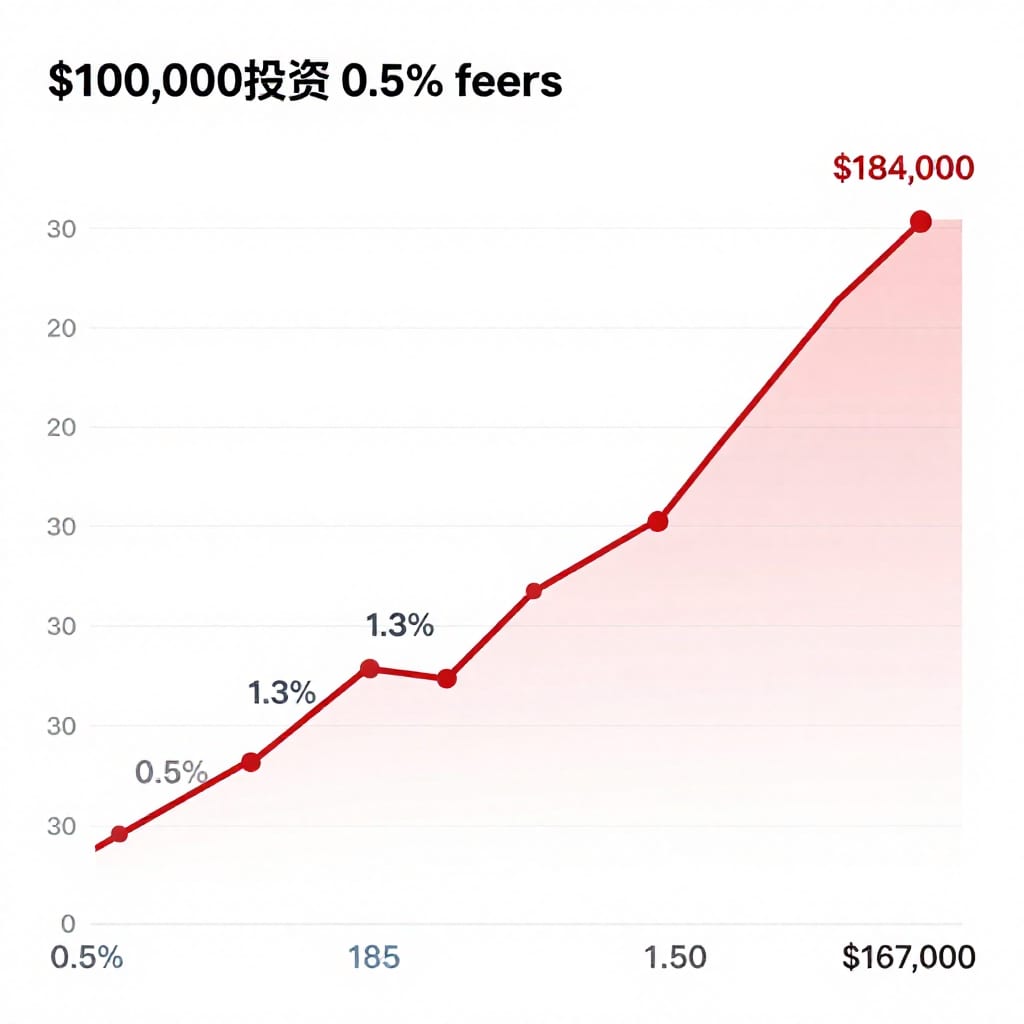
Let me be blunt: fees are the silent killer. I already mentioned the 403(b)’s history of annuity-heavy menus, but let’s put numbers on it. A 2024 study by the Center for American Progress found that the average 403(b) plan charges 1.3% in total fees, while the average 401(k) charges 0.5%. On a $100,000 balance over 30 years at 7% gross return, that 0.8% difference reduces your final balance from $761,000 to $574,000—a loss of $187,000. Yes, that’s more than $50k.
Even a 0.5% difference—which is common—costs $50,000+ on a $200,000 balance over 20 years. So when people ask “which is better 403b or 401k,” the fee answer is almost always 401(k), unless your 403(b) has been modernized with low-cost options.
Action step: Log into your plan and check the expense ratios of every fund. If they’re all above 0.75%, consider rolling over to a low-cost IRA or advocating for better options.
7. Portability and Rollovers: What Happens When You Change Jobs
Job changes are common, and your retirement account needs to move with you. 403(b) plans are generally more portable than 401(k)s—you can roll them into an IRA or a new employer’s plan with fewer restrictions. Some 401(k) plans, especially small ones, have restrictive rules about in-service distributions or require you to cash out if your balance is under $5,000.
But here’s a nuance: if you change jobs within the same school district or nonprofit network, your 403(b) can often stay put. For 401(k)s, you usually need to roll over to avoid high fees in the old plan. I once had a 401(k) from a small startup that charged 2% annually—rolling it to a Vanguard IRA saved me thousands.
My advice: Always roll over old retirement accounts to a low-cost IRA. It’s one of the easiest ways to reduce fees and maintain control.
Conclusion: Which One Should You Choose in 2026?
So, which is better? It depends. If you work for a for-profit company, the 401(k) almost always wins due to better investment options, lower fees, and stronger matching. If you’re in a public school or nonprofit with a 403(b), don’t despair—but do your homework. Check for a match, look for low-cost index funds, and take advantage of the 15-year catch-up if you qualify.
Here’s a quick decision framework:
- Work in for-profit? Choose 401(k).
- Work in nonprofit with modern 403(b) (low fees, good funds)? Stick with it, especially if you have long service.
- Work in nonprofit with annuity-heavy 403(b)? Advocate for change or roll over to an IRA when you can.
The $50k+ savings isn’t hype—it’s math. Take 30 minutes to review your plan’s fees and options today. Your future self will thank you.
Worth bookmarking before your next job offer negotiation—these numbers don’t lie.